In the precision-driven world of digital dentistry, a custom abutment is more than just a structural connector; it is a bio-mechanical interface. While standard margins have served the industry for decades, the Reverse Margin (often referred to as the J-shape or concave margin) represents a sophisticated evolution in design that prioritizes long-term peri-implant health and superior esthetics.
The Geometry of "Inward" Thinking
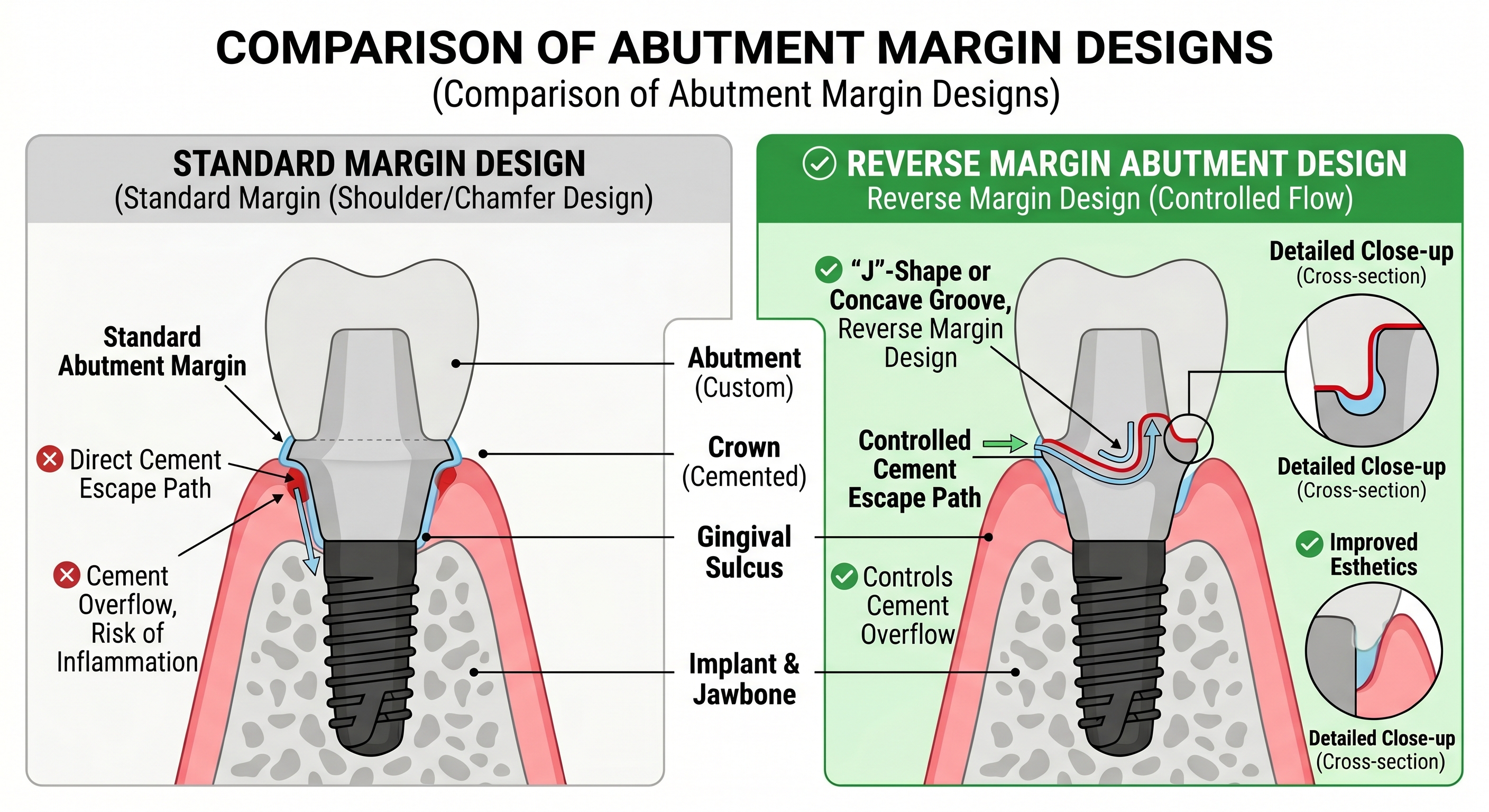
Unlike traditional shoulder or chamfer margins that extend the restorative platform outward, a Reverse Margin incorporates a subtle concave groove within the abutment body. By allowing the crown to sit "into" rather than just "on" the abutment, CAD designers can manipulate the emergence profile with far greater control over both material thickness and biological space.
Design Philosophy: We don't just design for a perfect fit; we design for a biological seal. The Reverse Margin is an engineering response to the challenges of soft tissue management.
Solving the "Silent Killer": Cement Sepsis
Sub-gingival cement remains the leading cause of peri-implantitis. The Reverse Margin acts as a brilliant mechanical trap. During the cementation process, the internal groove creates a controlled escape path. Hydrostatic pressure directs excess cement into the "J-trough" or upwards toward the margin, preventing it from being forced deep into the gingival sulcus where it becomes nearly impossible to debride.
Optimizing the "Pink Esthetic" Zone
The gray metallic shadows often seen at the cervical third of implant restorations are usually the result of inadequate soft tissue volume. By utilizing a sub-gingival Reverse Margin (typically placed 1.0mm–1.5mm below the tissue peak), iDentCAD designers achieve two critical goals:
- Increased Material Bulk: Provides the necessary space for high-translucency zirconia to mask the titanium substrate without over-contouring.
- Tissue Scaffolding: The concave "S-curve" transition provides a scaffold for the gingiva to thicken, creating a more natural, healthy transition from the sulcus to the clinical crown.

Comparison: Traditional margins (left) versus the iDentCAD Reverse Margin standard (right), highlighting the cement safety zone.
The iDentCAD Protocol: Design Parameters
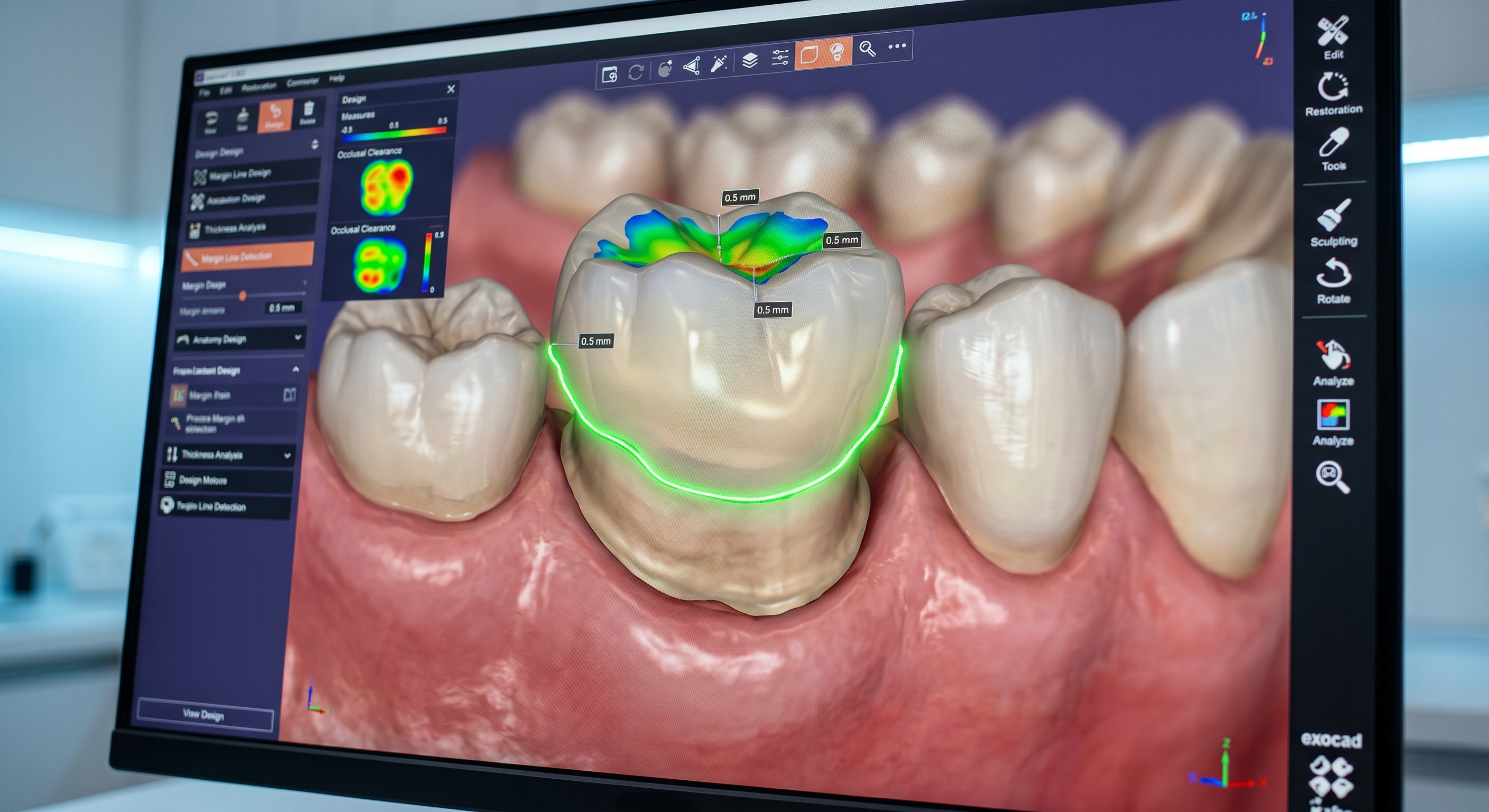
To execute a flawless Reverse Margin in software like Exocad, our specialists adhere to strict geometric parameters:
- Stress Distribution: The transition from the implant platform must be a smooth, continuous curve to prevent stress concentration points in the ceramic.
- Cement Gap Calibration: Precision offset settings within the groove area to ensure the crown seats fully without "binding" on the reverse ledge.
- Vertical Placement: Strategic positioning of the margin relative to the bone level to maintain the critical 3mm biological width.
Closing Thoughts
The Reverse Margin Abutment is not merely a technical preference; it is a clinical insurance policy. At iDentCAD, we believe that the pinnacle of CAD design is reached when technology works in harmony with human biology. By choosing specialized margin geometries, we empower clinicians to deliver restorations that are as durable as they are beautiful.
Ready to elevate your lab's restorative standards? Partner with iDentCAD for certified dental CAD designs that push the boundaries of precision.