In full arch implant restorations, most design discussions revolve around esthetics, occlusion, or material choice. But experienced clinicians and CAD designers know the truth:
If passive fit is wrong, everything else becomes irrelevant.
Passive fit is not just a technical term — it is the foundation of long-term implant success. And in a fully digital workflow, achieving it depends heavily on how the case is designed in CAD.
What Is Passive Fit — Really?
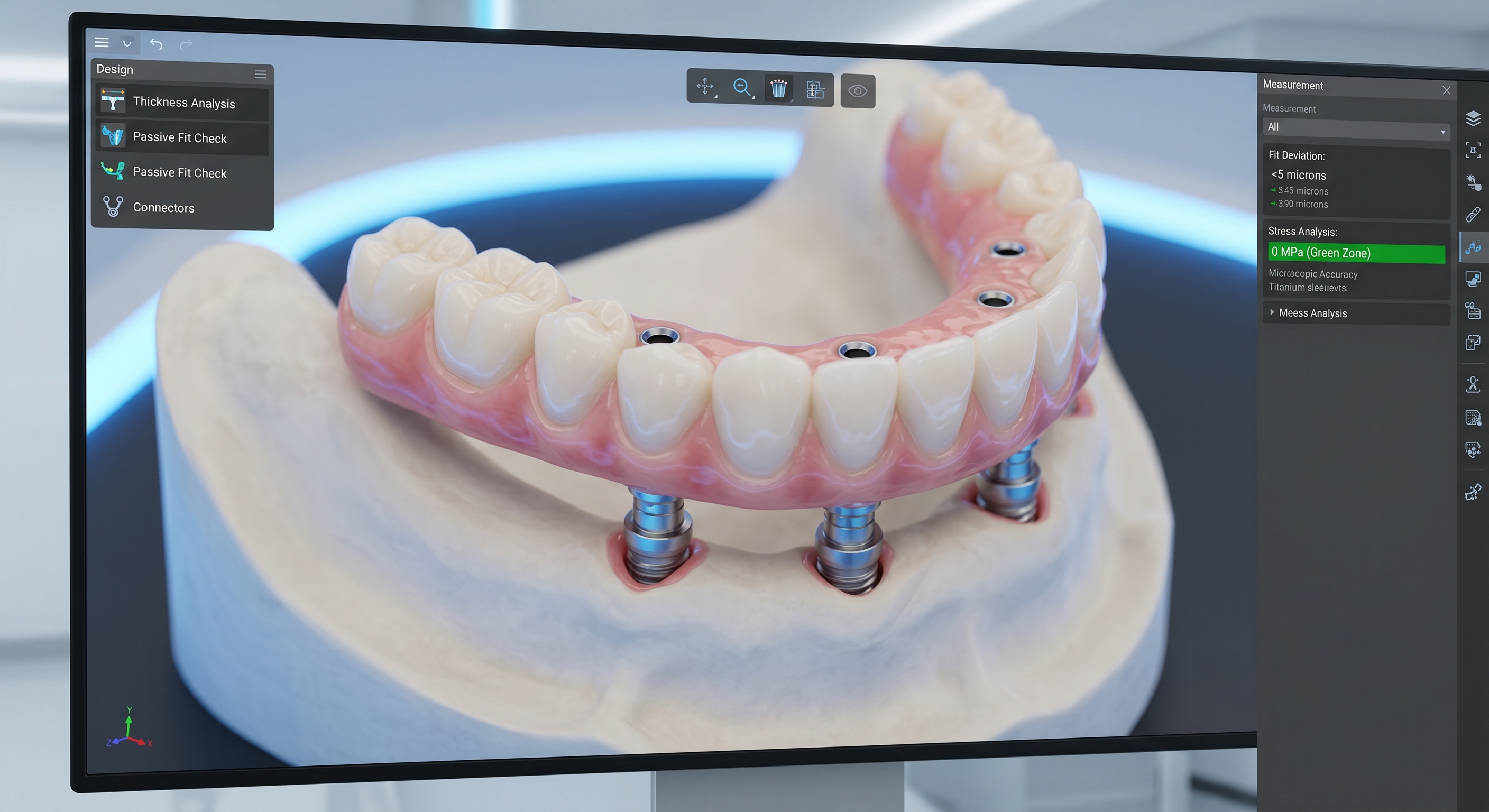
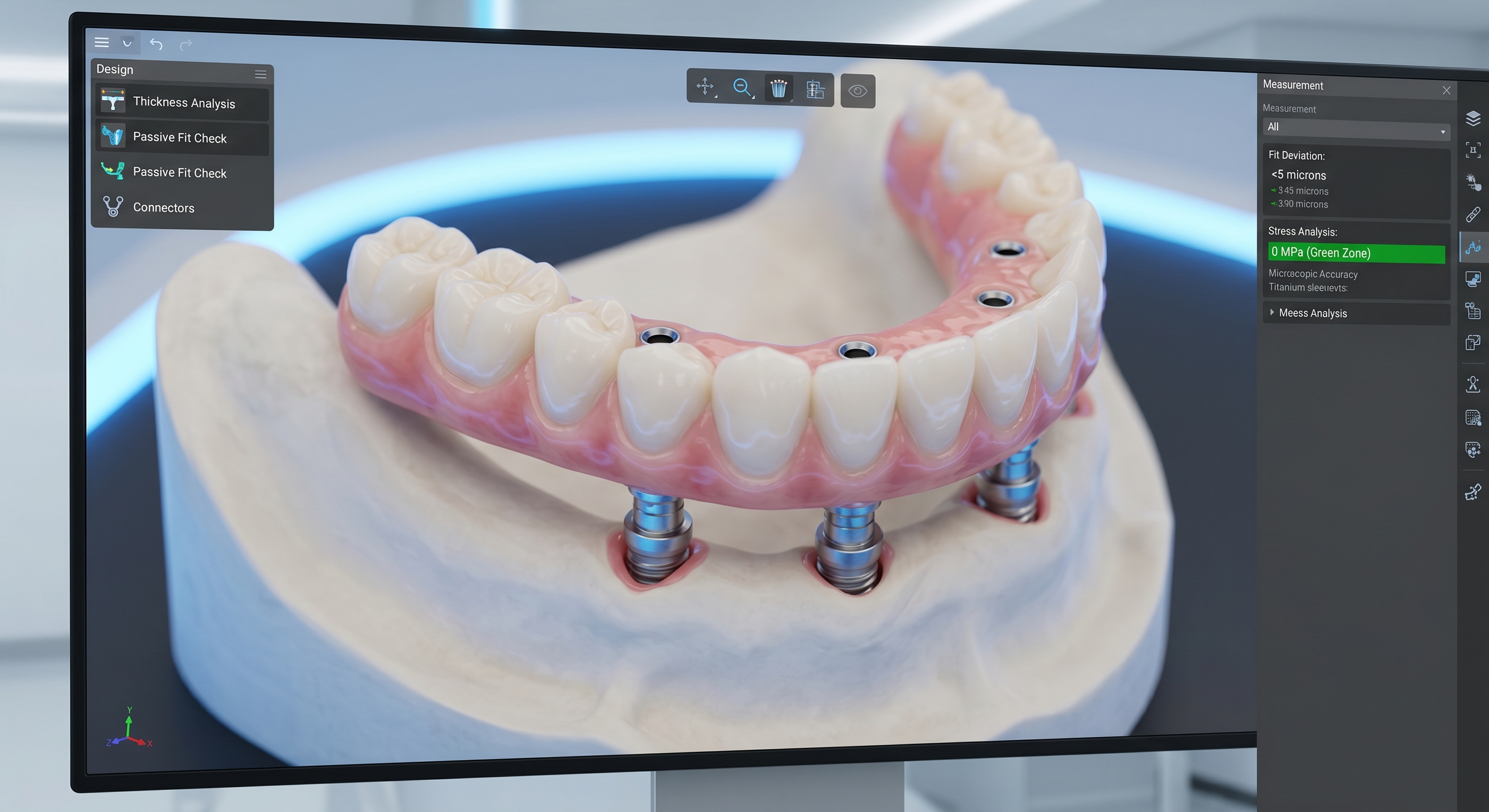
Passive fit means zero internal stress when the prosthesis is seated
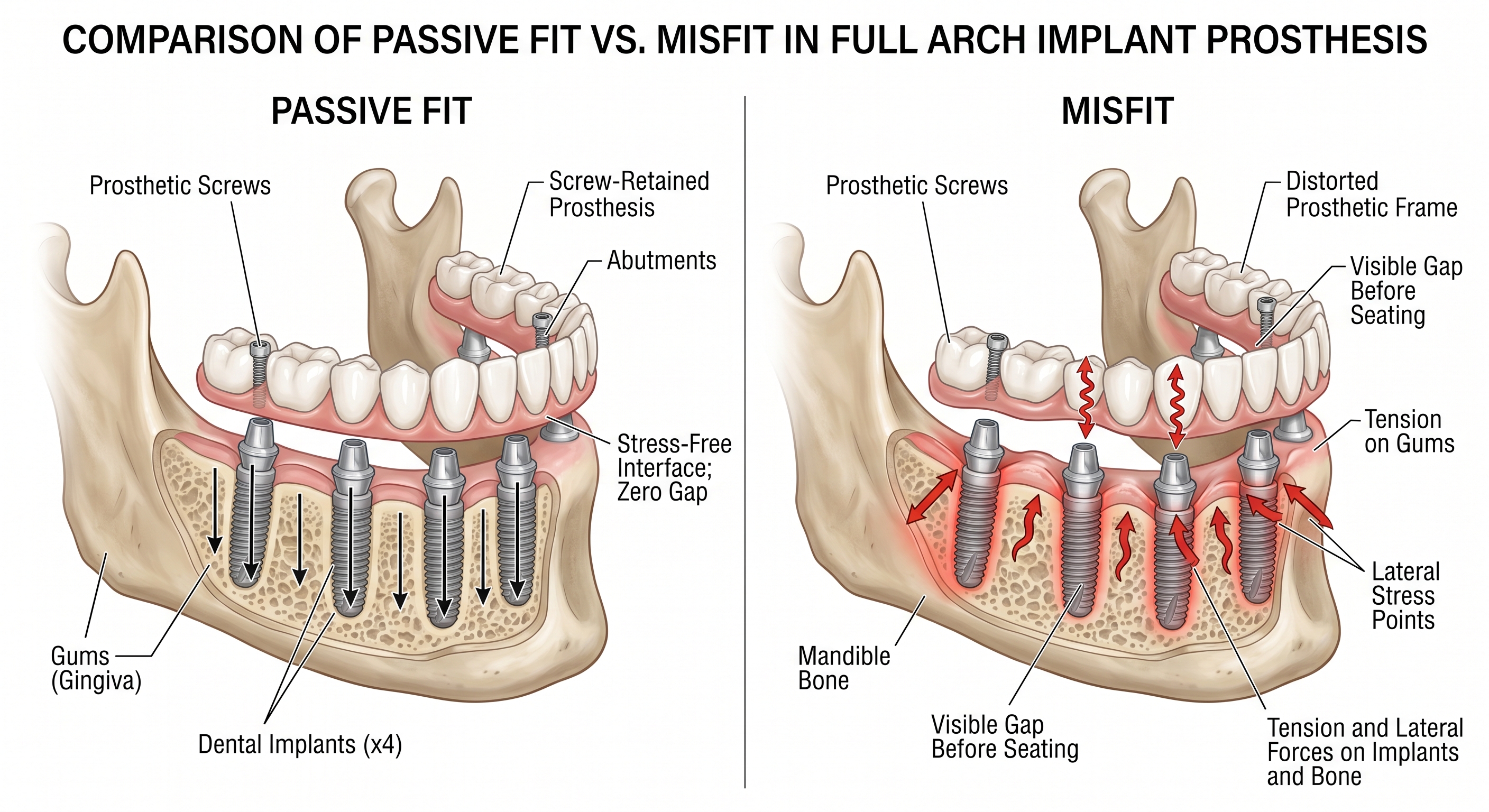
Passive fit refers to a condition where a prosthesis seats onto implants without introducing any strain, tension, or distortion.
In practical terms:
- All implant interfaces align perfectly
- No force is required to seat the prosthesis
- No internal stress is transferred to implants or screws
Even a small misfit — often invisible to the eye — can create long-term complications.
Why Passive Fit Is Critical in Full Arch Cases
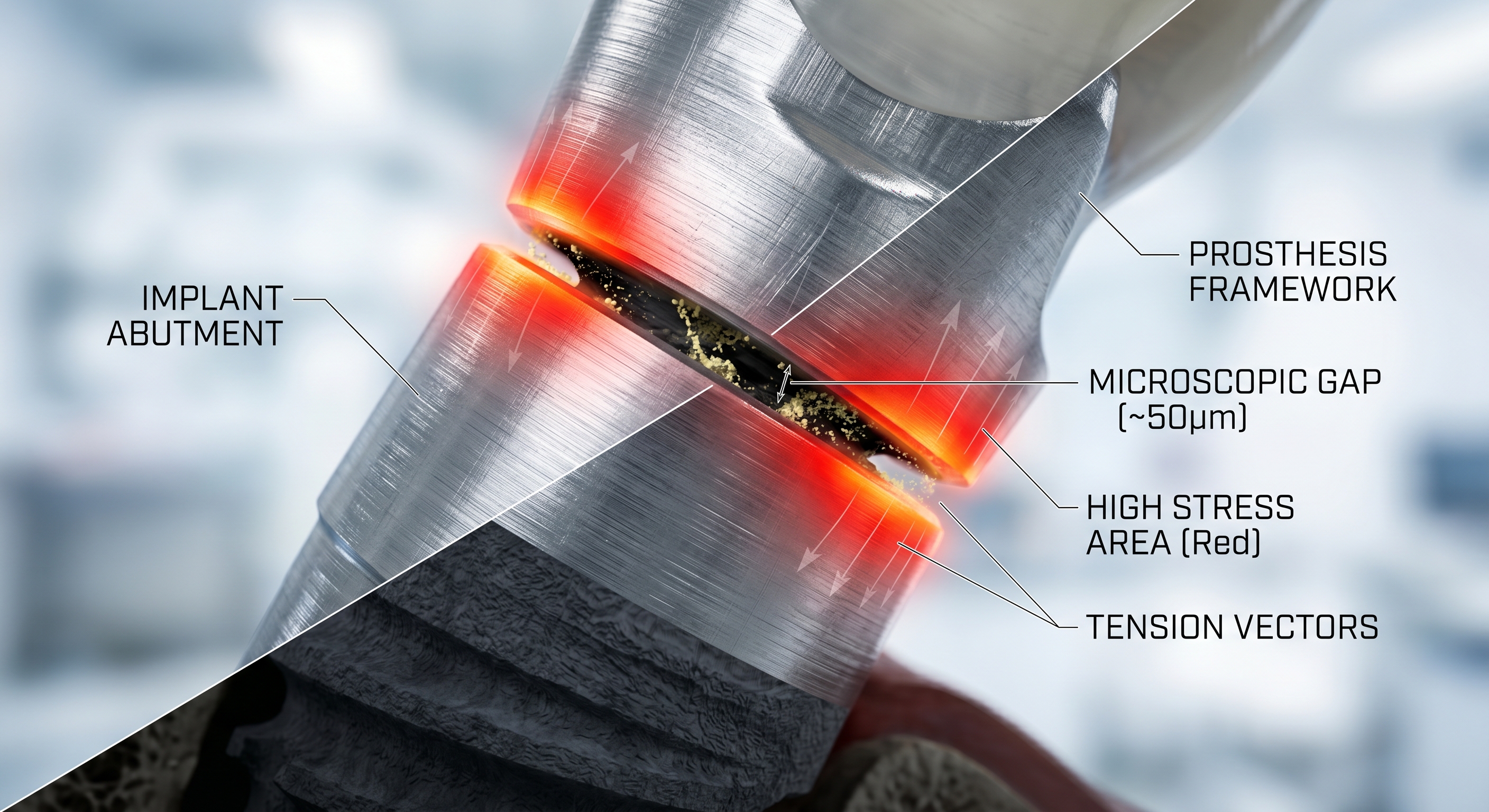
Microscopic misfits create stress that leads to screw loosening and long-term failure
Unlike single-unit restorations, full arch prostheses connect multiple implants into one rigid structure. This means any misalignment is amplified across the entire system.
Consequences of poor passive fit include:
- Screw loosening or fracture
- Implant overload and bone loss
- Framework distortion over time
- Patient discomfort and long-term failure
This is why passive fit is not optional — it is mandatory.
The Role of CAD in Achieving Passive Fit
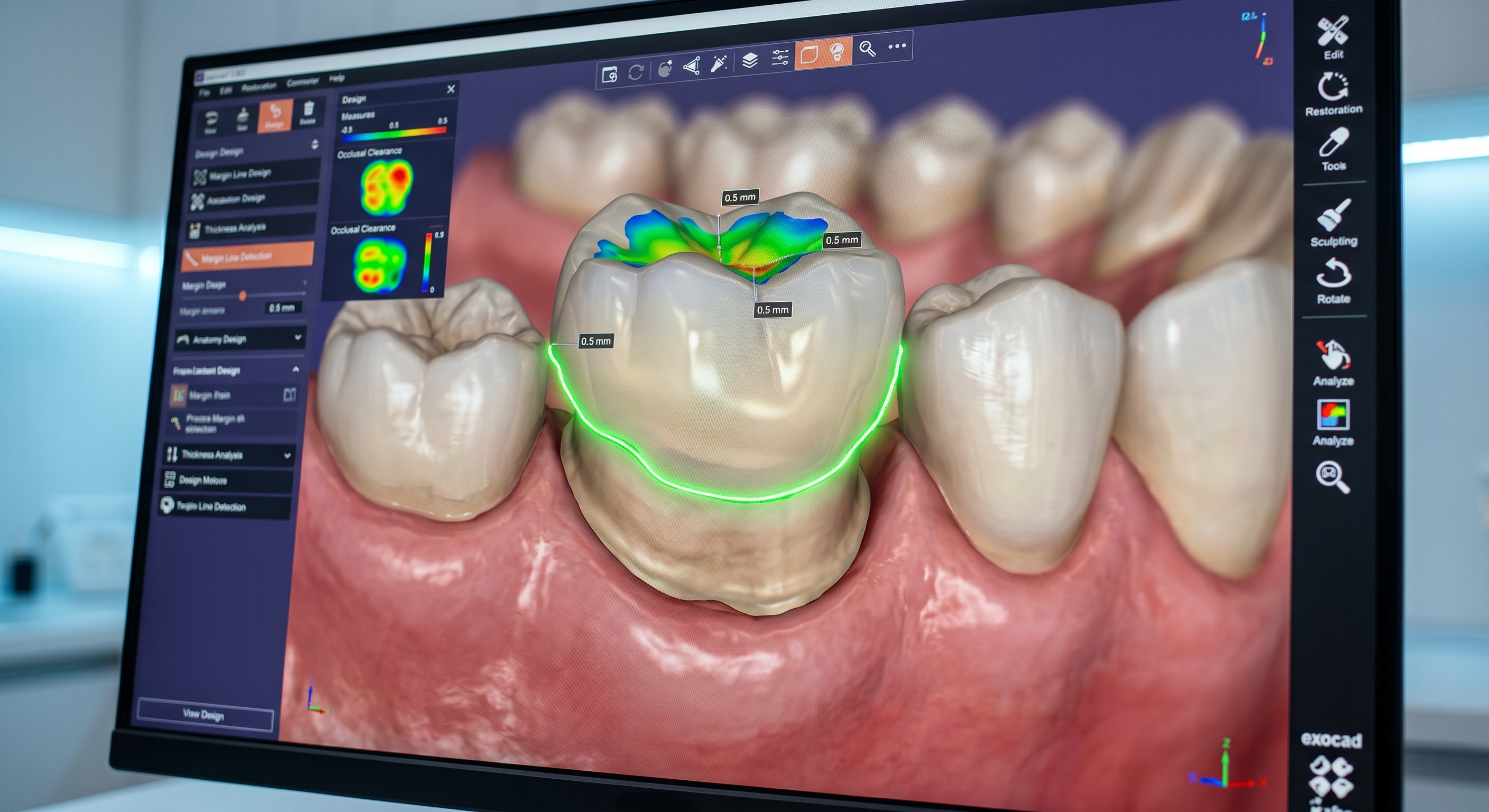
CAD design is where passive fit is either achieved — or compromised
In a digital workflow, passive fit is largely determined before the case is ever milled.
Key CAD factors include:
- Accurate implant library alignment
- Correct positioning of multi-unit abutments (MUA)
- Clean scan data without distortion
- Proper handling of scan bodies
Software can align components — but it cannot judge clinical reality. That responsibility remains with the designer.
Framework Design: Where Precision Meets Engineering
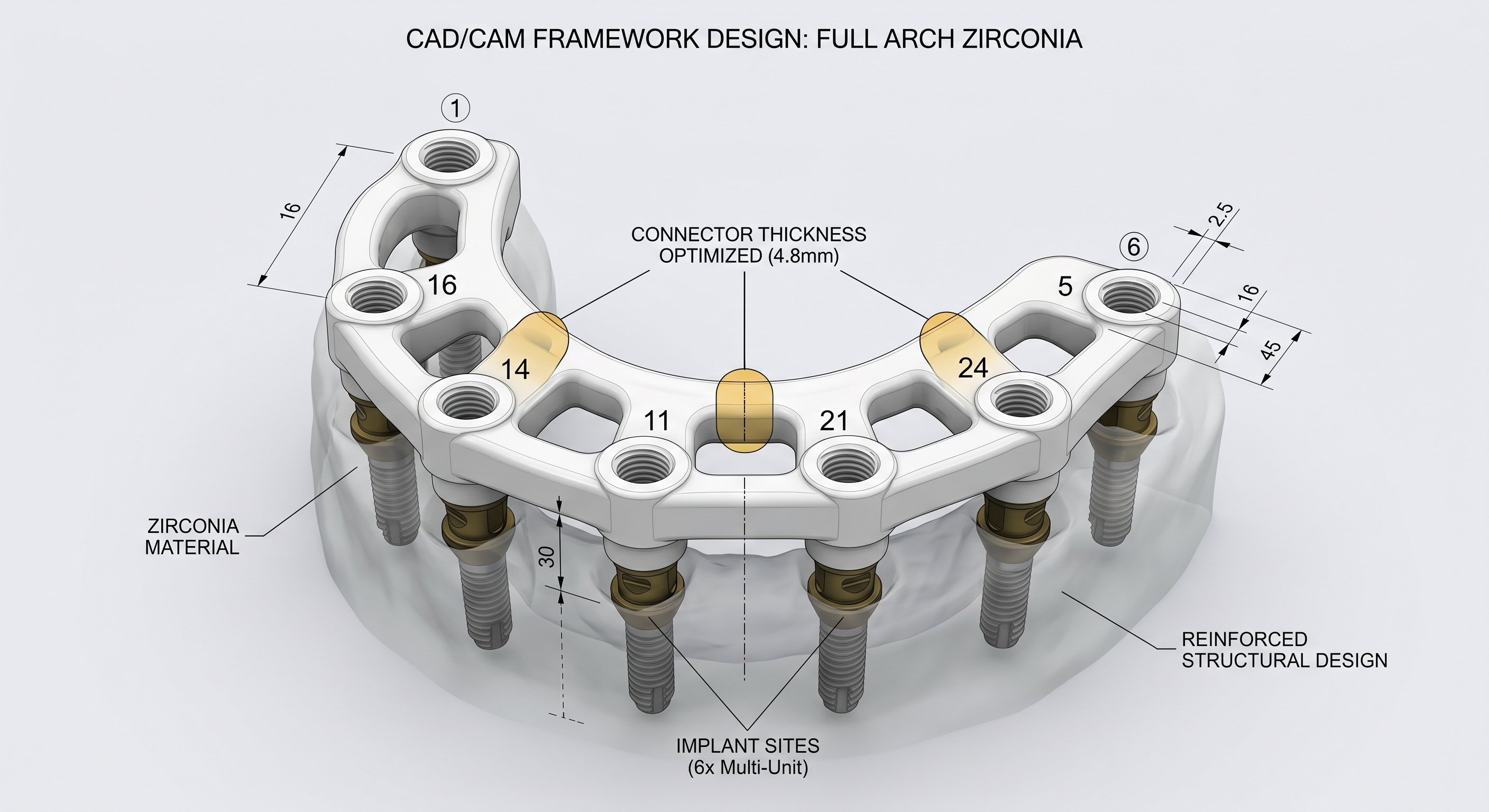
A well-designed framework distributes forces evenly across implants
The framework is the structural backbone of a full arch restoration. Its design directly affects passive fit.
Important considerations:
- Uniform thickness to prevent distortion
- Balanced connector design
- Avoiding internal stress concentration points
- Respecting material limitations (zirconia vs titanium)
A poorly designed framework may fit digitally — but fail physically.
Common CAD Mistakes That Break Passive Fit
- Ignoring scan inaccuracies or stitching errors
- Incorrect implant library selection
- Misaligned scan bodies
- Over-reliance on automatic alignment tools
- Lack of verification across multiple views
These mistakes are subtle — but their impact is significant.
Final Thought
Passive fit is not achieved by accident. It is the result of disciplined workflow, technical precision, and clinical awareness.
In modern dental CAD, tools are powerful, and automation is improving. But passive fit remains a human responsibility — defined by the designer’s ability to see what software cannot.
At identcad, full arch cases are designed with strict passive fit control at every stage — from scan verification to final framework refinement.