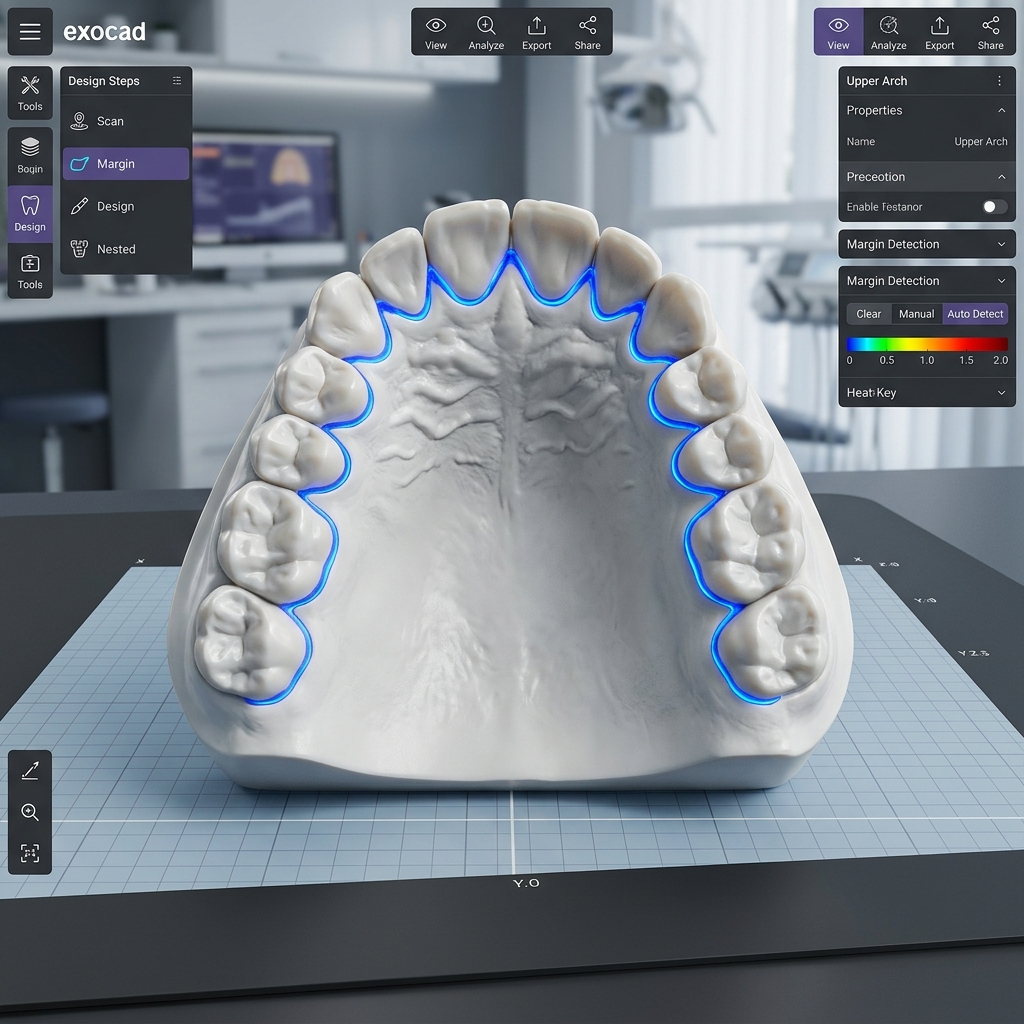
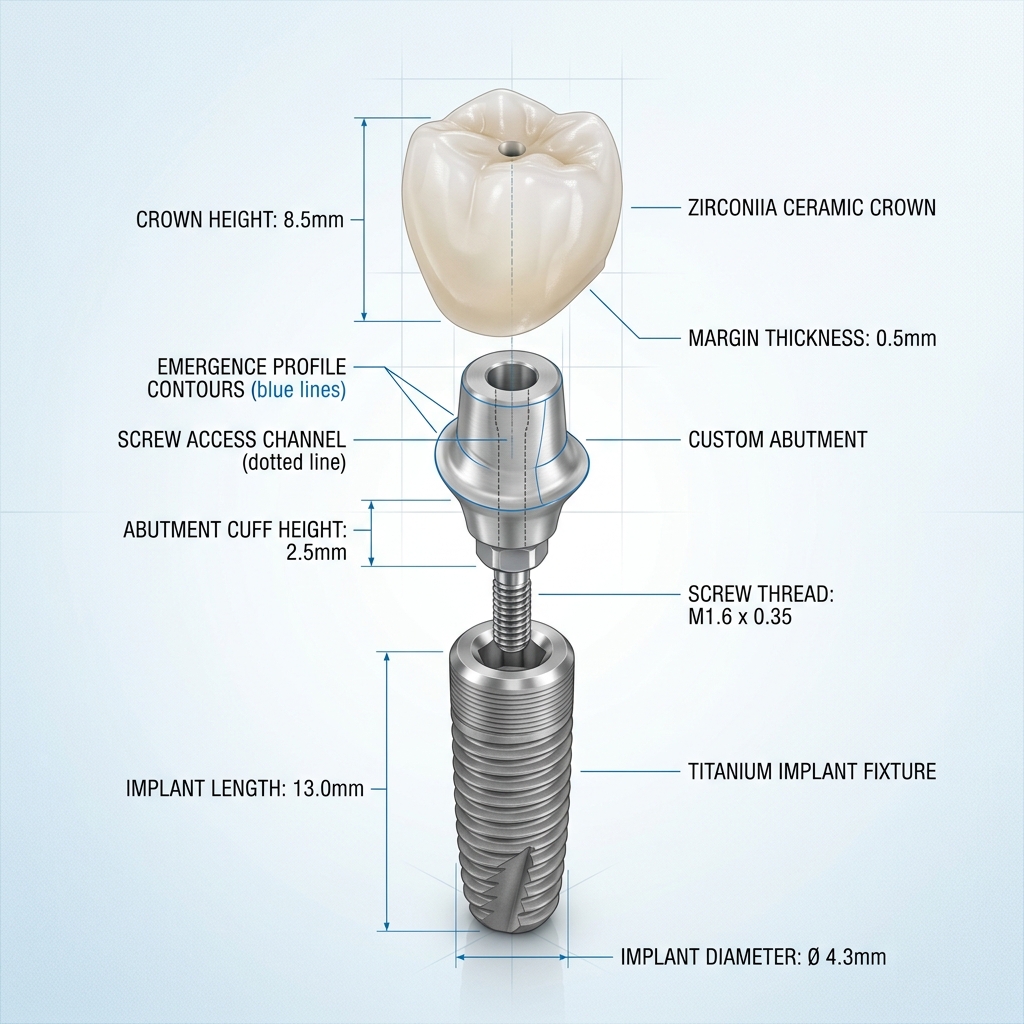
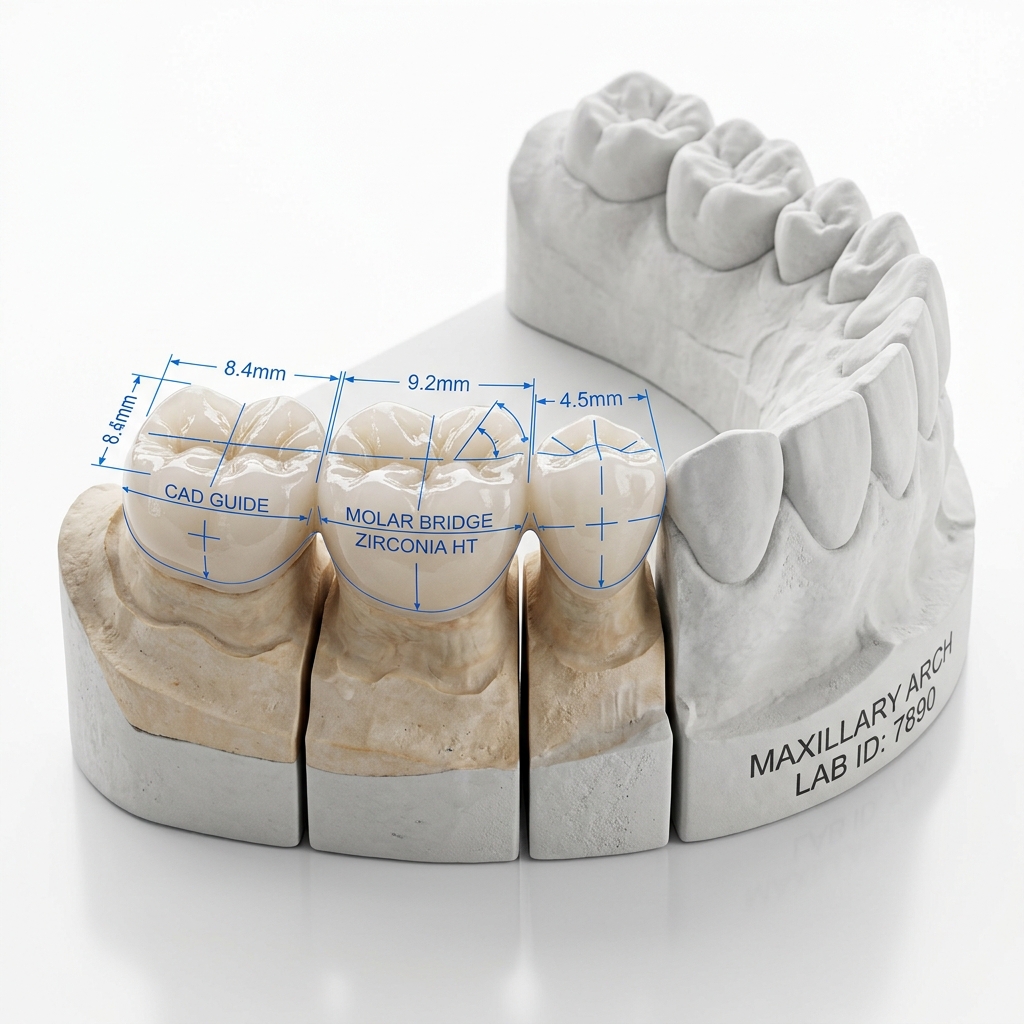
One of the most frequent questions we receive from new lab clients involves material selection: "Does it matter which material I specify when I submit my case?" The answer is unequivocal — yes, it matters enormously. The material you mill determines how I design the restoration at a fundamental level, from minimum thickness to connector dimensions to occlusal contact philosophy.
In this article, we break down the three most commonly outsourced CAD materials — Zirconia, PMMA, and Wax — and explain how each influences the design process.
Why Material Directly Affects CAD Design Parameters
The physical properties of a dental material — elastic modulus, flexural strength, shrinkage rate, and machinability — dictate the structural requirements of the design. A design that would be perfectly adequate in 5Y zirconia would fail catastrophically if milled in pre-sintered PMMA with the same wall thicknesses.
Every time you submit a case without specifying the material, our designers must either:
- Design to the most conservative (thickest) possible parameters — which may not fit within your patient's occlusal space
- Request clarification before beginning — adding 2–4 hours to your turnaround
Practice note: Always specify your milling material and block type in your case submission. This single piece of information prevents more design revisions than any other factor.
Zirconia: Your Design Parameters by Generation
Zirconia is not monolithic as a material category. The three main generations have significantly different mechanical and optical properties that affect design:
| Zirconia Type | Min. Thickness | Connector (posterior) | Key Characteristic |
|---|---|---|---|
| 3Y (3 mol% yttria — high strength) | 0.5mm | 12 mm² | Maximum fracture resistance; low translucency |
| 4Y (multilayer — mid translucency) | 0.7mm | 10 mm² | Best balance of strength and esthetics |
| 5Y (high translucency — esthetic) | 1.0mm | 9 mm² | Glass-like appearance; reduced flex strength |
For posterior bridges under heavy occlusal load, 3Y or 4Y is our recommendation. For anterior cases where esthetics are the priority and occlusal load is distributed, 5Y multilayer zirconia produces results that are nearly indistinguishable from natural tooth structure in photographs.
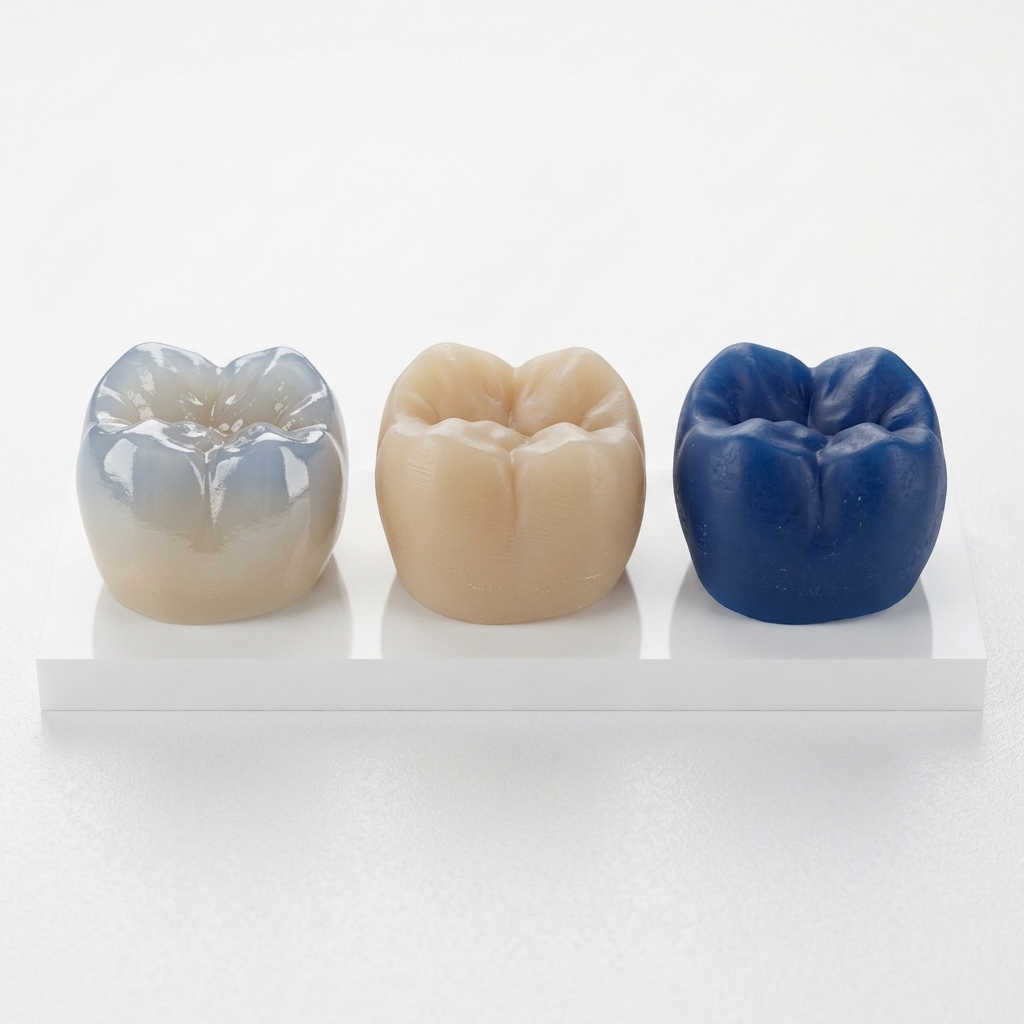
Material comparison: translucent zirconia (left), PMMA temporary (center), dental wax try-in (right)
PMMA: The Temporary That Teaches You Everything
PMMA (polymethyl methacrylate) digitally-milled temporaries are one of the most underutilized tools in restorative dentistry. A well-designed PMMA temporary serves multiple critical functions:
- Validates tooth position, proportion, and esthetic outcome before the final restoration
- Teaches the patient what to expect — and surfaces objections before bonding
- Matures the gingival architecture (critically important for implant sites)
- Provides a functional record of the correct vertical dimension of occlusion
PMMA requires significantly more generous wall thicknesses than zirconia (minimum 1.5mm on all surfaces) and is not designed to bear heavy posterior occlusal load long-term. The design strategy shifts: we prioritize esthetics and function over structural minimalism.
Need PMMA temporaries fast?
We design and deliver PMMA temporary STL files within 8–16 hours. Include your VDO and shade preference.
Dental Wax: Design for Try-In and Communication
Wax-milled try-ins serve the same clinical purpose as PMMA in many workflows, with the added benefit of lower material cost for the first design iteration. CAD-designed wax try-ins are completely machine-fabricated from digital files — no hand waxing required.
For wax, we design with:
- Slightly over-contoured interproximal contacts (wax compresses slightly under pressure)
- Conservative occlusal anatomy — function at this stage is secondary to position validation
- No undercuts — wax is fragile and must seat passively for accurate assessment
E.max and Pressable Ceramics
Lithium disilicate (E.max) combines excellent esthetics with sufficient strength for single-tooth anterior and premolar restorations. Design considerations:
- Minimum 1.0mm wall thickness (pressed route); 1.2mm (CAD/CAM cut-back route)
- No sharp internal line angles (stress concentration points)
- Maximum connector dimensions in cross-section: not recommended for posterior 3-unit bridges spanning more than one premolar
- Incisal edge: designed 1.5–2.0mm to allow adequate material for translucency layering by the ceramist
Full Material Comparison for Outsourced CAD
| Property | Zirconia (5Y) | PMMA | Wax | E.max |
|---|---|---|---|---|
| Min. wall thickness | 1.0mm | 1.5mm | 1.5mm | 1.0–1.2mm |
| Posterior bridge use | Yes (3Y/4Y) | Temporary only | Try-in only | Single units / premolars |
| Esthetic ceiling | Very high | Medium | Low | Very high |
| Design iteration cost | High | Low | Very low | High |
| Our recommended use | Permanent restorations | Validation / function | Shape / position | Anterior esthetics |
The right material for the right case is not a decision that can be made after design begins. It's the first question on every case form we send — because it's the first question every capable CAD designer asks. Establishing this habit in your submission workflow will make every case you send us faster, more accurate, and less likely to need revision.