In the era of full-arch rehabilitation, All-on-X is no longer just a restorative solution; it is a complex intersection of biomechanical engineering, digital occlusion, and periodontal harmony. At iDentCAD, we treat every All-on-X case not merely as a CAD file, but as a precision-engineered prosthesis designed to ensure long-term implant stability and biological integration in the oral environment.
Design Philosophy: Balancing Biomechanics and Esthetics
The primary challenge in designing an All-on-X framework—whether utilizing Titanium, Monolithic Zirconia, or High-Performance Polymers—lies in stress distribution. A failure to calculate the force vectors can lead to prosthetic fracture or peri-implant bone resorption. The iDentCAD workflow is built upon three technical pillars:
| Design Phase | Technical Focus | Clinical Objective |
|---|---|---|
| Occlusal Engineering | Establishing Centric Relation and Curve of Spee/Wilson | Prevention of occlusal trauma and equitable force distribution |
| Framework Architecture | Optimizing cross-sectional thickness and pontic geometry | Maximizing structural rigidity while ensuring hygiene access |
| Gingival Morphing | Simulating papilla architecture and emergence profiles | Achieving "Pink Esthetics" and optimal lip support |
Clinical Insight: A successful All-on-X prosthesis isn't measured on the day of delivery, but years later. Success is defined by stable peri-implant soft tissue maintained through meticulously designed cervical embrasures that facilitate easy cleaning by the patient.
The "Passive Fit" Protocol: Eliminating Micro-Gaps
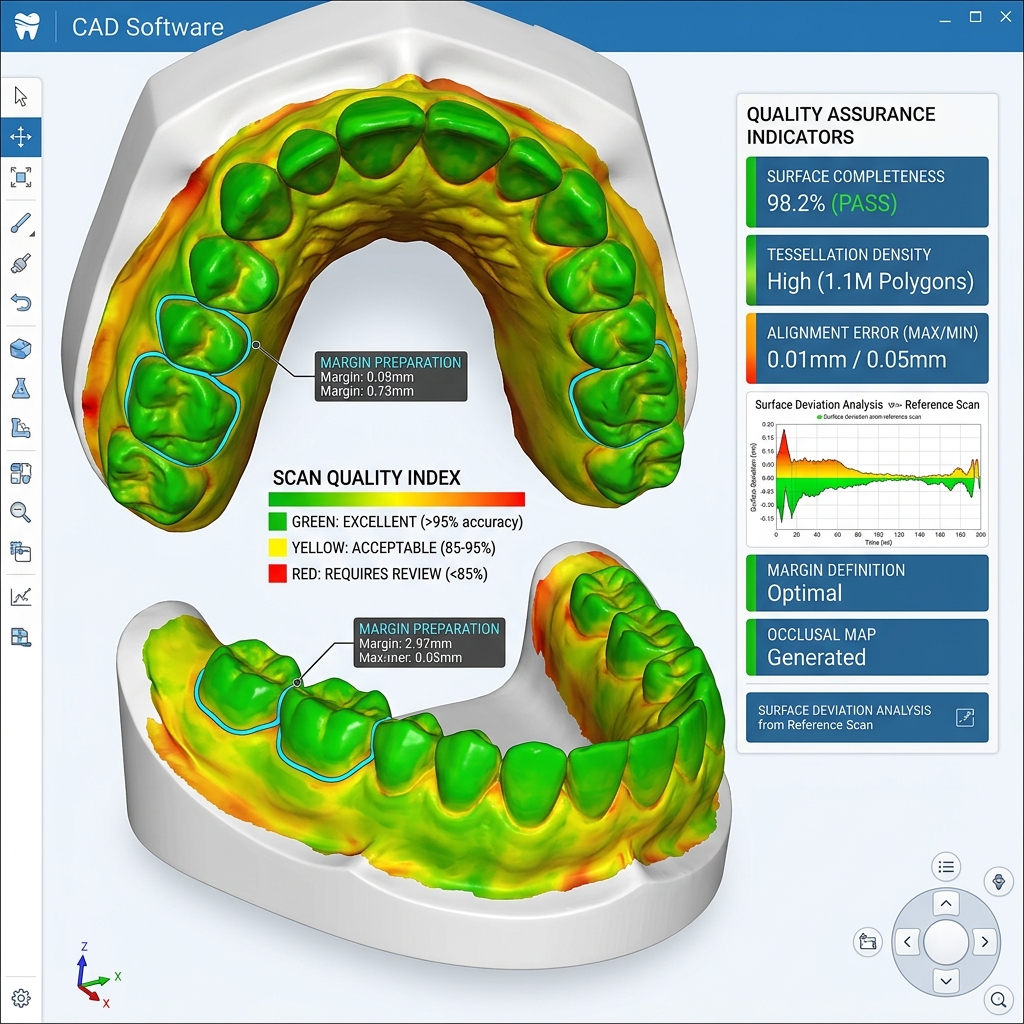
Discrepancies as small as 10 micrometers can induce chronic strain on the implant-abutment interface. To achieve absolute passive fit, iDentCAD employs a rigorous data verification protocol. We synthesize Intraoral Scan (IOS) data with Photogrammetry or verified verification jigs to eliminate digital distortion.
Our designers utilize advanced Standard Parts libraries within Exocad to customize Multi-unit Abutment (MUA) connections with micron-level precision, bypassing the volumetric shrinkage and inaccuracies inherent in traditional analog casting or suboptimal scanning workflows.

Optimized Titanium bar geometry: engineered for fracture resistance and biological compatibility at iDentCAD
Digital Gingival Morphing: The Art of Emergence Profile
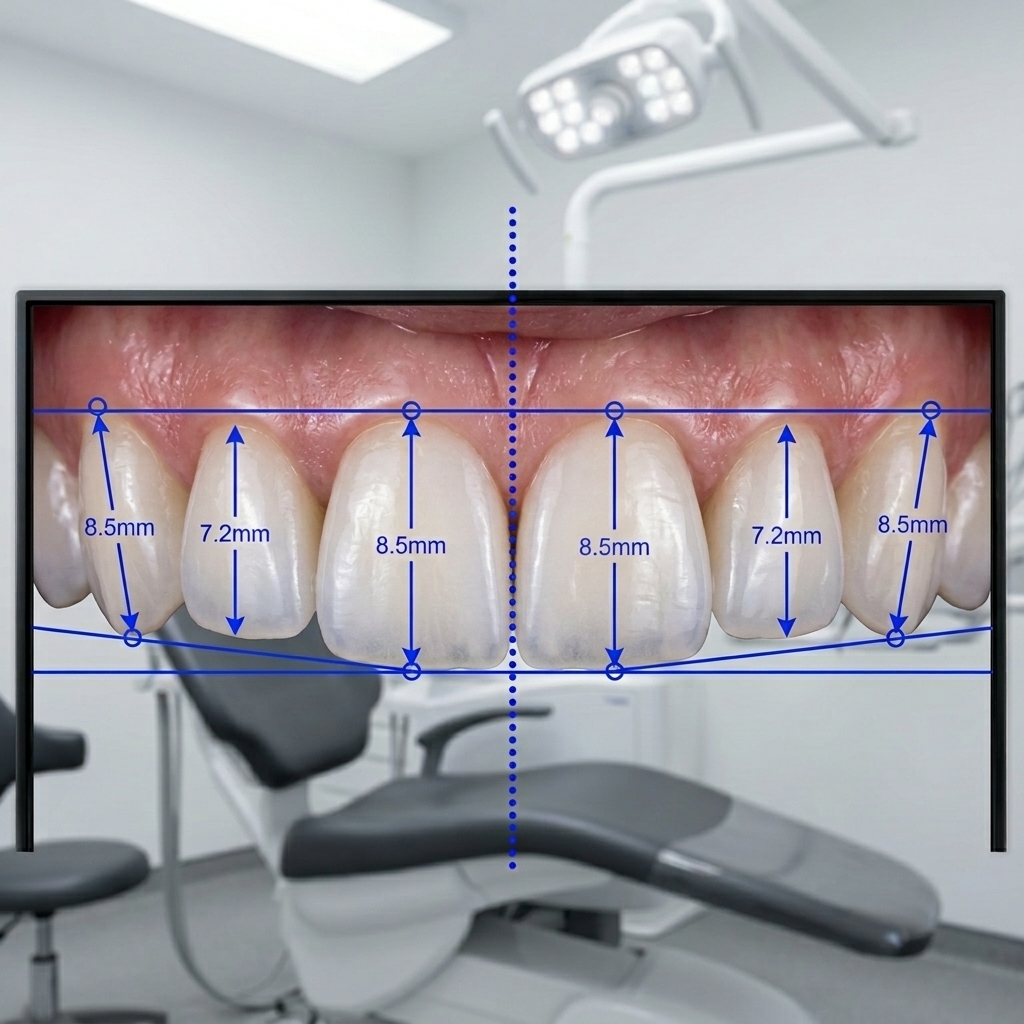
Modern All-on-X design requires a deep understanding of light refraction and material translucency. We sculpt virtual alveolar ridges and gingival stippling to guide the technician’s ceramic layering or staining process. By engineering the emergence profile from the MUA level up, we ensure that the transition between the prosthesis and the soft tissue is biologically seamless and esthetically indistinguishable from natural dentition.
Material Synergy: Strategic Selection for Longevity
At iDentCAD, we consult with our clinical partners to select materials based on the specific mechanical requirements of the case:
- Titanium Framework + Individual Zirconia Crowns: The gold standard for repairability and high-end esthetics.
- Monolithic Multilayer Zirconia: Ideal for durability, requiring expert "cut-back" design for facial porcelain veneering.
- Graphene & BioHPP: Biomimetic solutions designed for patients with parafunctional habits (bruxism) or those requiring shock-absorption to protect the opposing dentition.
Next Frontier: Immediate Loading Workflows
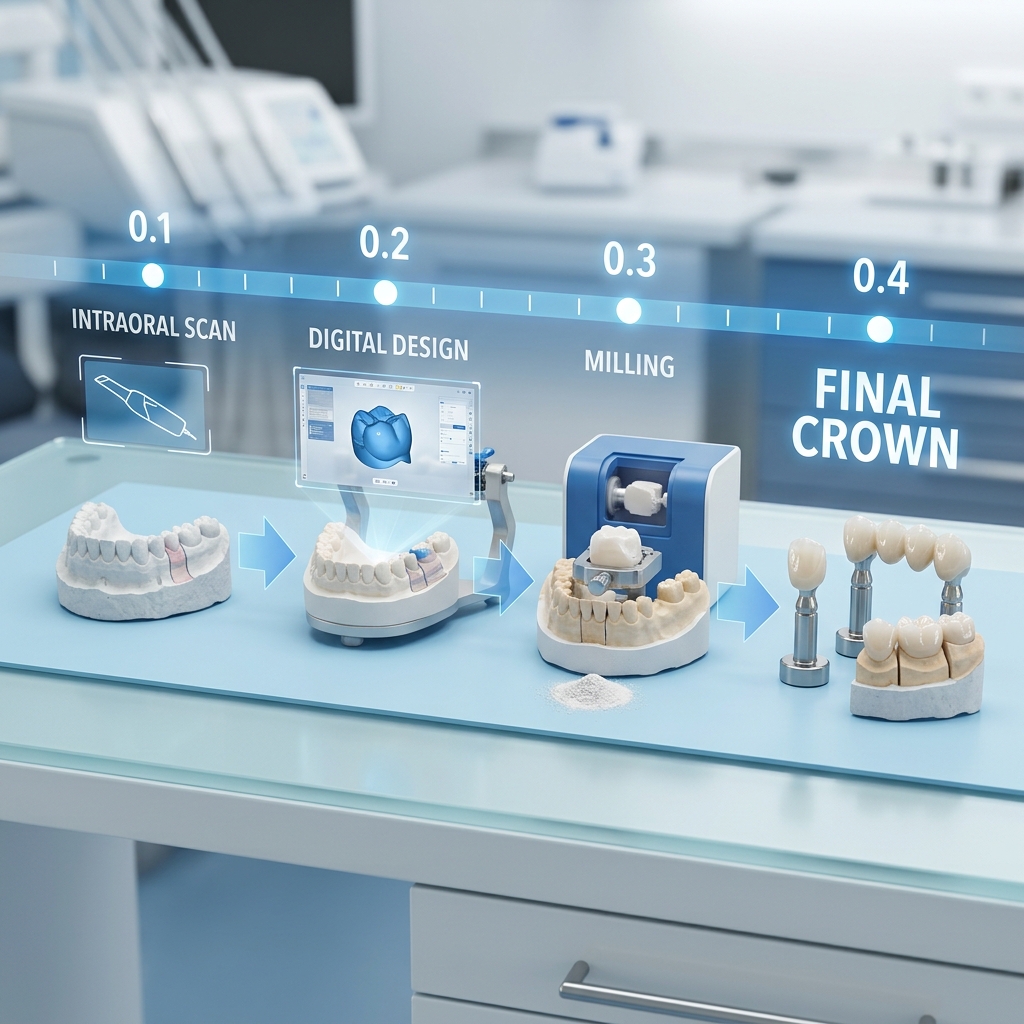
The future of All-on-X is speed without compromise. iDentCAD is leading the transition toward "Teeth-in-a-Day" protocols, where the provisional prosthesis is designed pre-operatively based on the Surgical Guide plan. This allows the patient to leave the clinic with a functional, esthetic smile immediately following implant placement.
Why Studios Choose iDentCAD
Designing an All-on-X prosthesis is an exercise in extreme precision. When you collaborate with iDentCAD, you aren't just receiving a STL file; you are gaining a partner dedicated to clinical stability. We translate complex chairside requirements into perfect CAD geometry, ensuring that every restoration we design enhances the clinician’s reputation and the patient's quality of life.

Image caption here